
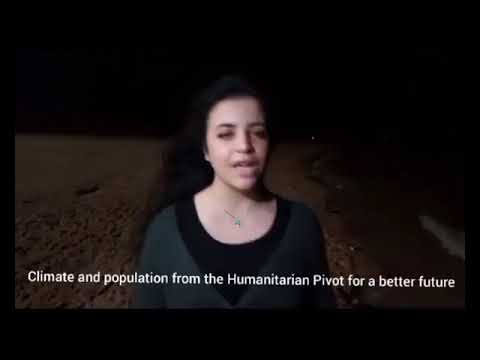
We open the Climate & Population blog with a story about our real heroes. They did not need expensive equipment or a large budget. Children and young women, guided by a remarkable woman, came together on the shore of Aqaba, Jordan, to make a video lasting just 25 seconds. They used ordinary phones, with no AI, professional cameras or outside funding. They had what mattered most: an idea and the conviction that their voices deserved to be heard.
Twenty-five seconds from Aqaba
Twenty-five seconds may seem brief beside the scale of the climate crisis. Yet the value of this work lies neither in its length nor in its production budget. Its makers did not wait for perfect tools or permission to speak. They stood by the sea and made a message about the future they will live in.
The people behind the message
Among them is Taimour. During the COVID-19 pandemic, at the age of 14, he won a Jordanian Ministry of Culture award in the “My Talent from Home” competition for stand-up comedy. Natalie and Baraa are university students; Batool is in secondary school. Each has a different path, but they share a question that reaches beyond their ages: what kind of world will the next generation inherit?
When young people speak about climate, they are speaking about more than distant figures. They are speaking about the water they will need, wheat and bread, the places they will call home, and their chances to study, work and live safely. No one knows exactly what their future will look like. That is precisely why they must have a place in today’s conversations and decisions.
A place in the decisions that shape their lives
Children and young people should not be asked to carry the burden of saving the world alone. The greater responsibility rests with institutions and decision-makers who can change policies and protect resources. But the participation of younger generations reminds us that those who will live with the consequences of today’s choices can also ask vital questions, point to what we have overlooked and help shape fairer responses.
The woman who brought these voices together and guided them is an essential part of this story. Making room for a new generation to express itself matters, even when the effort begins with a simple phone on an open beach. Young people need adults who listen and trust them, rather than always speaking on their behalf.
Why this is our first story
This is the spirit in which we want to begin the Climate & Population blog: connecting knowledge to people’s lives, listening to communities as closely as we study data, and welcoming voices across generations. We will write about climate, population, water, resources and policy. We will keep returning to one question: how can what we learn help us make better decisions for people living today and for those who will live tomorrow?
To Taimour, Natalie, Baraa and Batool, and to the woman who stood with them: thank you for beginning. Twenty-five seconds cannot change the world on their own. They can, however, prompt one person to listen, another to ask a question and a third to act. Change often begins with steps just like these.